
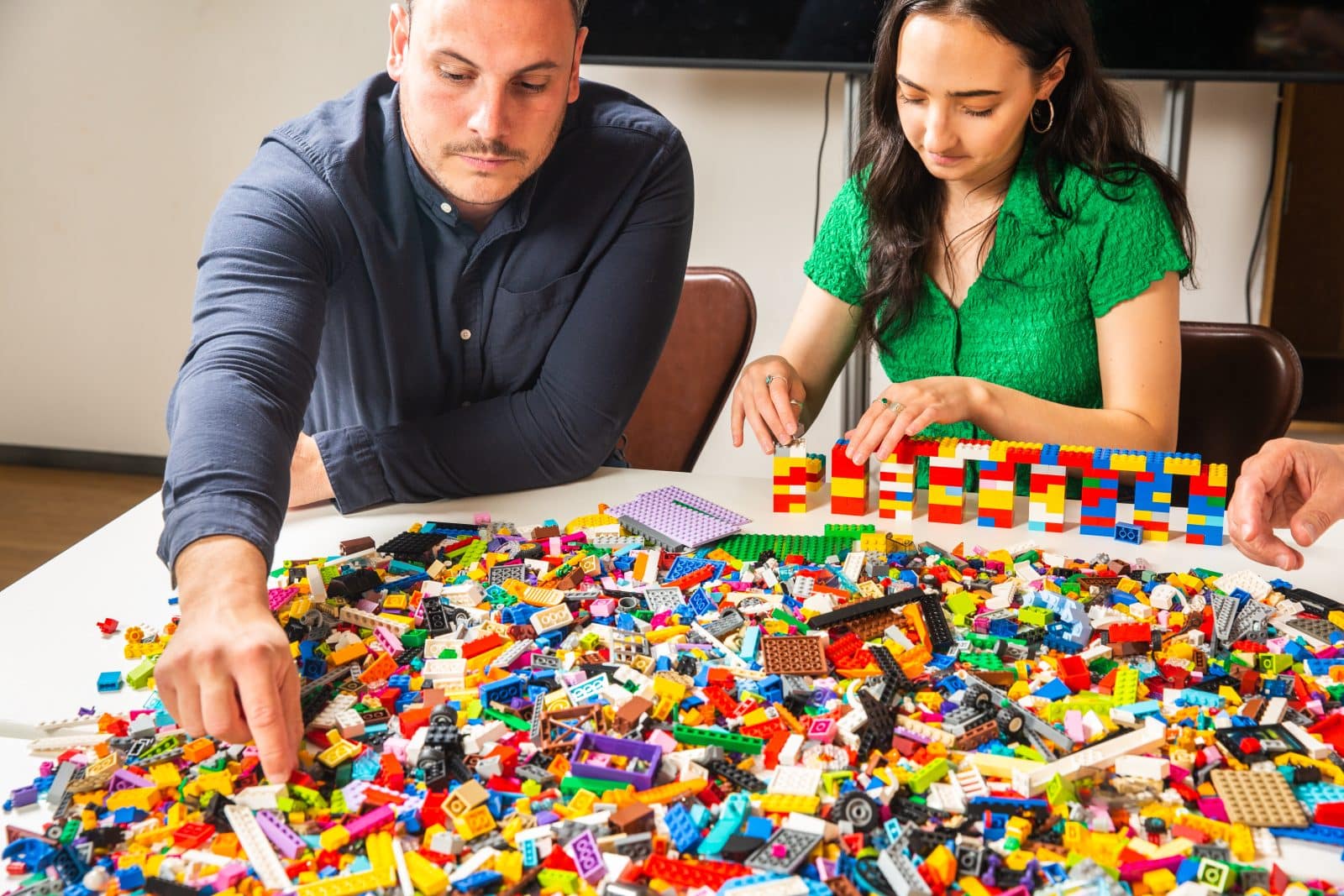
Play has an important place in the workplace: this is a claim you would expect from a company who exist to play in the workplace, but there really is a benefit to introducing games and play in to your workplace, and there are multiple opportunities for you to do so.
Playing games in the workplace has benefits including:
- Lowering stress and preventing burnout: play can provide a mental reset for teams who spend a lot of time deeply focused on their workload and there is a definite wellbeing benefit
- Improving communication and team collaboration: shared, playful experiences help to break down corporate structure and make communication between employee levels more open and honest, improving your team’s ability to collaborate
- Providing a fail safe environment: introducing games and exercises in which team members can “fail safely” builds confidence and allows creative thinking to flourish
- Improved problem solving skills: regular games in the workplace can provide your teams with new problem solving tools for real-world problems and challenges in your business
There are many ways you can introduce play and games in to your workplace (not all of them involve LEGO bricks, apparently!):
- Ice breakers are a great way to energise your team – brief, focused challenges with a clear end goal. Discover more ice breaker activities with LEGO bricks from Bricks McGee here!
- Free play can provide a good drop in activity for wellbeing, allowing for a low pressure creative outlet in busy periods.
- Structured team building activities can be a good to increase focus during corporate away days, particularly between presentations
Why is play so important in the workplace?

The routine and monotony of the average working day can create a channel in which your team are in “auto pilot” mode, simply fulfilling requests with minimal creative thinking. Team building games are an important part of the workplace if you want to make the most of the minds in your team.
Play in the workplace can:
- Lower stress and prevent burnout: regular play breaks can reduce fatigue in team members, and provide a mental reset, particularly for high-stress and high-dependency teams, and relieve the monotony of workplace rhythms – essential to providing mental space to think, innovate and adapt
- Improved collaboration: shared play experiences dismantle rigid hierarchies, build psychological safety, and foster deeper trust among colleagues
- Enhanced creativity in a “fail safe” environment: play lowers the fear of failure, allowing employees to experiment, approach problems from fresh angles, and innovate more freely
- Better problem solving skills: teams who play regularly in the workplace can develop better problem solving skills and communication skills
- Create team cohesion: play in the workplace gives a sense of involvement within the team towards fun, shared goals
Adding play to the workplace has the power to refresh tired minds, and consider challenges in your business from different perspectives.
Team building approaches to consider in the workplace
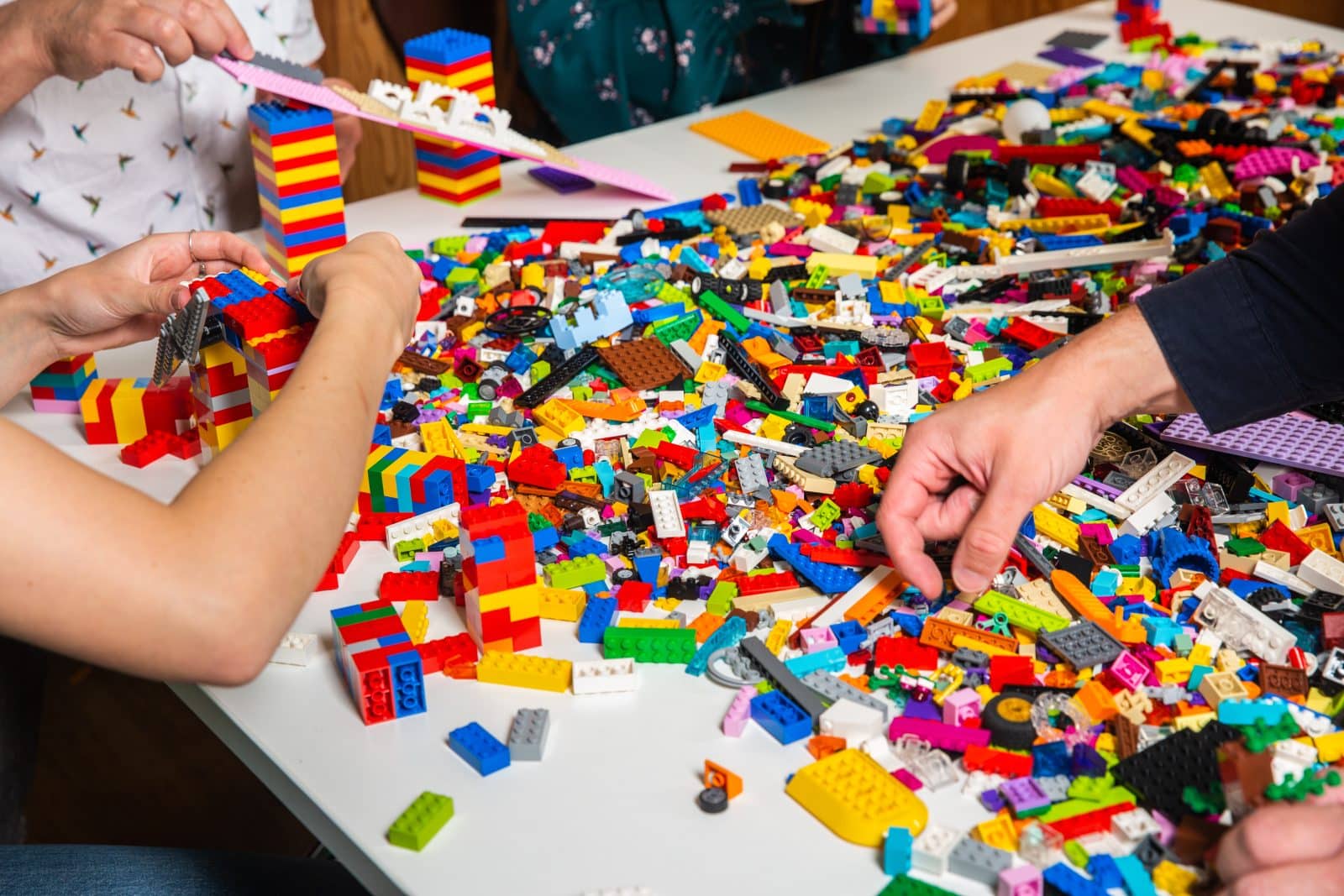
Team building is not a one-size-fits-all solution – the size of your team, their existing familiarity level with other members, and the difference in seniority and ranks within the group can make big differences to how team building is successfully implemented in businesses.
There are many types of games to play in the office, and finding games suited to your team may require some experimentation.
Icebreakers with a considered approach
Icebreakers are a great way to introduce games to your workplace – why not try it at the beginning of your team meeting:
- One truth, two lies – this works best for teams of 10 or fewer. In a circle, each team member takes turns to say one truth and two lies about themselves, and other team members are tasked with guessing which statements are true and false. Keep it fast-paced to keep interest high.
- Rock, paper, scissors – play this classic playground game with your team, with the winner staying on. A great way to introduce play to your team with zero budget.
- Pass the brick – a great ice breaker with LEGO bricks – from a selection of LEGO bricks with limited colours, begin passing a red brick clockwise. Keep introducing new brick colours with additional rules (eg, green bricks should skip every other person, blue bricks should circulate anti-clockwise around the group).
Using play with LEGO bricks as a method of team building
LEGO bricks are a great tool for team building, and for introducing play in to the workplace. Most people are familiar with LEGO bricks from their own childhood, and/or have children of their own at home and have experience there. Bricks McGee’s range of team building activities with LEGO bricks have been
Bespoke quizzes for your industry
Another great way of team development via gaming is to introduce quizzes about your industry or product range to your team activity roster. The quiz doesn’t have to be long, and can be a few short rounds of ten questions on:
- Your product specifications – how many outputs does the Widget2000 have?
- Your company history – what year was the company founded? Who was the seventh employee?
- Team members – try adapting the “one truth and two lies” format above in to a quiz round!
There are many quiz apps available to help you run the game digitally, but for that old school “pub quiz” appeal, asking teams to write their answers with pen and paper and swap their answer sheet for marking can’t be beaten!
Outdoor activities and games
Easier said than done with the unreliability of the weather here in the UK, but taking your team out of your office space and in to the great outdoors. Try the below ideas for outdoor games with your team:
- Book a walking history tour of your local area – these are often a cost effective way to provide a team activity with meaning – follow this up with a quiz on local history once you’re back in the workplace to encourage engagement between team members
- Set a photo scavenger hunt – task your group with photographing 25 specific items in your local area (a blue door, a bakery window display, a pelican crossing, a yellow car, etc) – you can split them in to teams of 5 people to add a competitive edge, or it can be completed individually
Game show-style games to promote complete team participation
Another great way of introducing games to your workplace is to replicate popular game shows for your team such as Taskmaster, Pointless and Would I Lie To You? If this becomes a regular event for your team, consider a leaderboard of individual or team scores!
You can ask team members to take turns to organise the games, ensuring everyone has a turn at hosting, and spreading the organisation between your team.
How do you know where you should start?
For businesses and teams who are complete new to games and play in the workplace, we recommend starting here:
- Ask your team for their input: asking for their preference on activities and games, how long they’d like to play for, how regularly the team should meet, the time of day, and day of the week can help ensure maximum participation and buy-in from your team
- Mix formats and challenges: rotating a mixture of game and play styles will help appeal to different members and even the playing field if you’re running a leaderboard
- Set a date and time, and cater for your team: the lure of coffee, tea, cakes and biscuits can help your team members anticipate the event positively
Our most important advice is – don’t give up if the first attempt at introducing play to your workplace isn’t a success – vary formats and opportunities and you will get a feel for what will work for your team over time.
Conclusion
You can now see the power of play in the workplace! From lowering stress levels and improving team cohesion and creative problem solving skills, play in the workplace can be used as a tool for employee wellbeing, skills improvement, and cohesion between team members. Whilst there is not one-size-fits-all way to introduce play, we hope the ideas above provide inspiration and a starting point to office games for you.
And, of course, if you’d like some help to introduce LEGO bricks in your workplace for games and play, please do get in touch.